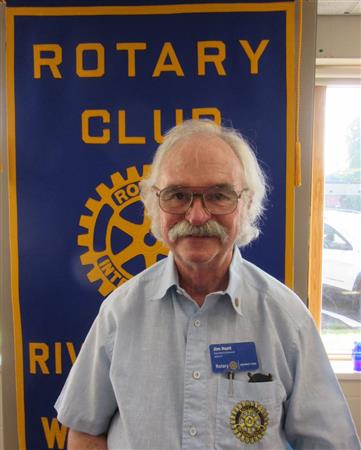
LIFT -- standing for Listen, Inquire, Facilitate, and Transform -- is District 5960's only district-wide service project. It aims to reduce extreme poverty and to improve the quality of life in rural Nicaragua. In describing both the philosophy and the conduct of the project, Jim Hunt emphasized the numerous connections to non-governmental organizations who are the "boots on the ground" when Rotarians are not there.
About the Speaker: Jim Hunt is a member of the White Bear Lake Rotary Club. Jim has been a Rotarian since 1989, and he was District Governor during the 2016-17 Rotary year.. He is very active at both the club and district level. At the District level, he is a Grants mentor on the district Grants Subcommittee, the District International Service Chair (DISC) and a member of the LIFT steering team.
Click "Read More" for more detail on LIFT.
White Bear Lake Rotarian and former D5960 District Governor 2016-17, Jim Hunt told us about the status and progress of our district's international project in Nicaragua. LIFT (Listen, Inquire, Facilitate, Transform), formerly known as Fast for Hope, is District 5960's only district-wide project, and it is entirely supported by contributions from District 5960 clubs and members. Hunt described what has been learned, and where the project stands in 2023.
Rotary International has seven areas of focus: 1) Promoting Peace, 2) Fighting Disease, 3) Providing Clean water, Sanitation, and Hygiene, 4) Protecting the Environment, 5) Saving Mothers and Children, 6) Supporting Education, 7) Growing local Economies. LIFTdirectly impacts areas 3 - 7.
The mission of the LIFT initiative in Central America is: To Foster the Means to End Extreme Poverty and Sustainably Improve Lives. Over time it has become clear that having Rotary (or any outside group) decide what the community needs doesn’t work. It is important to build and facilitate a community response and ownership of solution to problems. The LIFT leaders determine that they needed to build community leadership and buy-in for the project. Also, the project had to be “doable”. For instance, Rotary could not build a $3 million road. Therefore, the community decided that what they needed was easy access to water. Rotary would not drill for water until the community governance of the project and a process of paying for the water was in place. Payment was required to ensure that the water project would be sustainable into the future.
LIFT works with partners. For this project their partners were PCF (Planting Change Foundation) which taught students how to monitor water quality and EWB (Engineers without Borders), which supplied technical support. They dug a 720 foot deep well in the mountains. Water is pumped into holding tanks placed on a high point in the mountains and then gravity allowed water to flow through pipes buried in hand-dug trenches to 230 homes.
The main lesson learned was to build community and then leadership within the community first. Once that is done, the community decides on a project, helps build the solution and takes ownership of the finished product and maintenance.